












So, you’ve got yourself this appliance, probably with the hopes of it being low maintenance. We understand that completely, as cleaning ovens isn’t a top priority on our house chores either.
However, you’ve read or heard from friends or family members some things, and now you’re wondering what’s fact and what’s fiction.
This guide clears up those common myths, and it also gives you some handy cleaning tips. With them, your self-cleaning oven will continue to serve you for years to come, and you’ll amaze everyone with your culinary skills.
Let’s begin!
Some Common Myths About Self-Cleaning Ovens
Self-cleaning ovens can be confusing–aren’t they supposed to do what their name implies?
Sure. And when you add in a few myths about them, it can get even more confusing.
Here are the most common myths debunked:
Myth 1: No Manual Cleaning Needed
Here’s the truth: self-cleaning ovens have cool features to make cleaning easier, but you still need to give them a hand sometimes.
You don’t need to resort to what most people do to clean regular ovens (and you’re probably thanking God each time you don’t have to do it, especially if you’ve done that for years).
However, doing some cleaning by hand is sometimes necessary because food can get stuck in places that the self-cleaning feature can’t reach. For instance, when cheese drips on the oven door, it might not get cleaned up and could start to smell.
Myth 2: Self-Cleaning Reaches Everywhere
The self-clean feature is pretty good, sure, but it doesn’t get every little spot. That’s why you need to regularly wipe the doors and rubber seals to stop grime from building up. This ensures your oven seals properly and is running efficiently for years to come.
Myth 3: Racks Don’t Need Cleaning
People often think the self-cleaning takes care of the racks, too. Wrong. In fact, it’s better to take them out and clean them separately. A quick wipe with a cloth will keep everything working smoothly and extend the life of your oven.
Cleaning Mistakes You Want to Avoid
First, don’t grab the bleach or ammonia. They might sound effective, but they can quickly ruin the oven’s surface and stop it from cleaning itself properly. Instead, mix some baking soda with water. It’s gentle, effective and good for the planet too!
Also, steer clear of abrasive tools. Things like tough scrubbers or steel wool are a bad idea. They can scratch up the inside and make the oven less effective. Go with a soft cloth or sponge to keep everything in good shape.
And lastly, check the manual. That’s what it was designed for, after all–to make your life easier! It’s got important tips for your specific model, showing you the best way to clean it. By avoiding these slip-ups, you’ll keep your oven in top shape and working great for longer.
What Are The Best Cleaning Products for Self-Cleaning Ovens
Picking the right cleaning products for your appliance is how you help it to last longer and work well. Using the wrong products can damage the oven’s enamel and reduce its effectiveness.
So, always check the labels to make sure they’re okay for your oven type. Going for eco-friendly cleaners is a win-win—they’re easy on your oven and good for the planet. You could even mix baking soda with water for a homemade, gentle option.
There are loads of brands with eco-friendly cleaners that are really worth trying. Steer clear of anything with bleach or ammonia, as these can harm your oven’s insides. Look for products that say they’re safe for self-cleaning ovens.
When you’re using any cleaner, grab a soft cloth or sponge to avoid leaving scratches. While some of these eco-friendly cleaners might need a bit more time to do their magic, they keep your oven cleaner and safer.
That’s how you ensure your oven will stay in top shape, with its self-cleaning feature working like a charm for years to come!
Step-by-Step Manual Cleaning Guide
How to clean a self-cleaning oven sounds a bit ironic, sure. However, doing that by hand from time to time is super important to keep it running smoothly. There’s simply no other way around it if you want to squeeze the maximum value for your money and avoid costly replacements.
Here’s a simple yet effective way to go about it:
Preparation and Removal
Start by taking out the oven racks and shelves. This makes it easier to clean everything well and stops gunk from building up. Let the racks chill in some warm, soapy water while you focus on the rest of the oven.
Applying the Cleaner
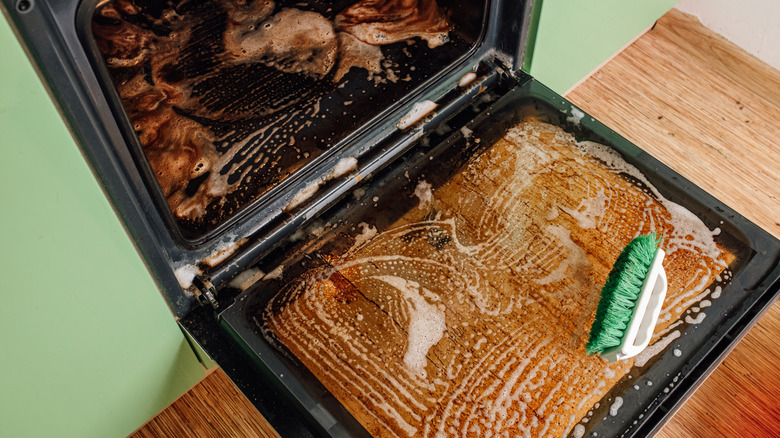
Mix baking soda and water to create a paste. It’s really good at removing dirt without scratching the oven. Spread this mixture around with a spatula or soft cloth, and leave it overnight to soak into any tough spots.
Cleaning and Reassembling
The next day, grab a damp cloth and wipe the inside of the oven. As we discussed above, don’t use anything too rough that might scratch it.
For the racks and shelves, gently scrub them with a soft brush, rinse them thoroughly, and dry them with a microfiber cloth to prevent streaks. Make sure you put them back properly so the oven works as it should.
Doing this will keep your oven in top shape and make it last longer.
Preventive Maintenance Tips
Using your oven’s self-cleaning feature often can make life easier by reducing the need for tedious manual cleaning.
For example, it’s smart to use it right after big cooking days, such as when you prepare a Sunday roast or a large holiday meal. This prevents grease and grime from accumulating, making cleaning easier.
Also, popping a lid or some foil on your dishes is a great trick to avoid spills that turn into hard-to-clean stains. This little tip keeps things tidy and makes cleaning up a breeze. If you do spill something, a quick wipe with a damp cloth stops it from becoming a stubborn mess.
And lastly: don’t cram too much into the oven, as squeezing things in can lead to food spills or splatters. Leaving enough room for air to circulate helps everything cook evenly and keeps your oven nice and clean.
By picking up these easy habits, you’ll save yourself from tough cleaning chores and keep your oven running smoothly for longer.
When to Call Professional Oven Cleaners
If your self-cleaning oven’s acting up or there’s a persistent, weird smell you can’t get rid of, it might be smart to get a pro involved before things get worse.
Odd noises during cleaning can also be a hint that something’s wrong mechanically. And if you spot any cracks or warping inside, that’s a big warning sign. That’s a clear indicator it’s better to play it safe and consult an expert before little problems turn into big headaches.
Loads of service providers offer cleaning and repair for these ovens, and they’ve got the right tools and know-how to fix issues right. If you’re unsure about how your oven’s doing, calling a pro can keep things running smoothly and prevent more damage later on.
Conclusion
If only looking after your self-cleaning oven were as simple as just hitting a button and walking away, without having to do anything!
Still, with all the perks that this appliance provides, you have to agree that it deserves at least minimal attention from time to time to make sure it keeps serving you for a long time.
So, why not add your beloved, trustworthy oven to your cleaning list and keep your kitchen’s main player in top shape? We’re sure you won’t regret it.

